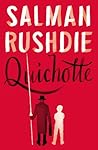
 Quichotte by Salman Rushdie
My rating: 5 of 5 stars
How often is it that you come across a novel that overwhelms you in a manner indescribable, that leaves you with a nostalgia for the past and an ache for the future? I don’t remember having read anything other than A Hundred Years of Solitude by Marquez that has left me as dazzled as this opus by Sir Rushdie has.
I am left stunned by the sheer magnitude this novel encompasses. A homage to Don Quixote by great Cervantes, Quichotte is a parody of our times. A dreaded apocalypse brought about by a climate change, the dominance of right, internet frenzy, racism, ugly face of capitalism...you name it and it is there. It seems like everything that’s going wrong in the world finds a place in this work.
This book has as many layers to it as a reader can imagine. Very obviously, it’s the tale of Quichotte, fashioned after Don Quixote, who sets in search of his love Ms. Salma R. But then it’s a tale written by one Sam Du Champ, who is also on a quest - a story within a story. But can we say it is a story within a story within a story? For the whole time I was reading this, I was thinking it has to do something with the author himself. But what could it be exactly?
Sam and Quichotte are both from Bombay in India, as is Rushdie. Whereas Quichotte is looking for Salma, Sam is looking for love of his son and forgiveness of his sister, but what is the master looking for? Which quest is he on?
Quichotte unites with Salma at the end to escape from the apocalypse to supposedly an earth like planet through a portal Mayflower whose allusion to the ship which transported Pilgrims from Plymouth to New World cannot be ignored. Also, Quichotte traverses seven valleys to reach to Ms. Salma and sees his journey as something which will end with the world ending. For Sam, the author of Quichotte, the end culminates into the merging of fact and fiction, the convening of two stories, perhaps the wayfaring from one world to the next.
It would be preposterous to say anything of the aim of the author himself. For as great novelist as Sir Rushdie, one can only assume that his pen was wielded to perhaps assert the unavoidable transience that humankind is bound to take but also that it is possible to have that impossible dream of making things right while on the threshold of life itself.
I cannot recommend this book highly enough.
PS: Thanks to Penguin India and Vivek Tejuja for the review copy.
View all my reviews

No comments:
Post a Comment