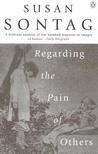
 Regarding the Pain of Others by Susan Sontag
My rating: 4 of 5 stars
Sometimes back I watched the movie “The Bang-Bang Club” based upon the lives of a group of photojournalists who went by that name in Johannesburg in the mid 80s. These photojournalists mostly clicked photographs of the victims of apartheid or of the violence perpetrated by clashes between different black ethnic groups in South Africa. The movie also focused on the distress which these journalists went through after or while clicking the photographs. One of the journalists of the club, Kevin Carter (played by Taylor Kitsch in the movie), had won a Pulitzer for his famous photograph depicting a starving child and a vulture in famine hit Sudan in 1993. The picture was clicked at such an angle that it seemed that the vulture was waiting for a chance to feed upon the poor child. There was a huge controversy when this picture was first published and most readers condemned Kevin for a lack of empathy.
The St. Petersburg Times wrote:
“The man adjusting his lens to take just the right frame of her suffering might just as well be a predator, another vulture on the scene.”
After three months of his winning the Pulitzer, Kevin committed suicide.
For a few days I was haunted by the movie but eventually I forgot about it. And it wasn’t until I read Regarding the Pain of Others by Sontag that I remembered the movie and my experience of watching and subsequently, forgetting it. As I read the work, I questioned my response to the movie and also to the deluge of images of pain sweeping the social media on the internet. What do I see when I see those images, what do I feel? Do these images, in any way, affect the way we respond to tragedies, to wars, to life?
In this work, Sontag presents a Critique on the images of suffering of others. She mulls over the motives of photographers engaged in capturing images (specifically) of war, calling them specialized tourists, citing various examples of such photographs where the sole purpose of photographer was to educe a certain response even if that meant careful selection and preparation of the scene prior to shot in war hit places. The response, mostly shock according to her, has been the stimulus that leads to the fixation of people for such photos.
She criticizes Roger Fenton’s very famous photograph from Crimean war “The Valley of the Shadow of Death”, calling it as a portrait of absence, of death without the dead, a road swamped with rocks and cannonballs which didn’t really need to be staged. But her criticism doesn’t even spare us, the spectators of such photographs who are more disappointed than surprised at discovering that many of the famous war photos appear to have been staged.
Her sarcastic voice is quite discernible while accepting the inevitable reach of twenty four hours news channel on TV who make use of images featuring violence just for the sake of increasing TRP’s.
Wars are now also living room sights and sounds. Information about what is happening elsewhere, called "news," features conflict and violence— "If it bleeds, it leads" runs the venerable guideline of tabloids and twenty-four-hour headline news shows——to which the response is compassion, or indignation, or titillation, or approval, as each misery heaves into view.
She is concerned about the various responses that such photographs may generate:
“In fact, there are many uses of the innumerable opportunities a modern life supplies for regarding—at a distance, through the medium of photography—other people's pain. Photographs of an atrocity may give rise to opposing responses. A call for peace. A cry for revenge. Or simply the bemused awareness, continually restocked by photographic information, that terrible things happen.”
When we really think of it, it is true that this is the kind of response evoked in our minds when we see images of suffering. Most of the times it is this awareness that terrible things happen, sometimes it may be a sense of relief (in the subconscious) for being spared of the suffering, a guilt laden respite we may not wish to admit to our conscious mind even. Sometimes it may be just a curiosity to witness the limit to which humans can debase themselves. Sontag says:
Edmund Burke observed that people like to look at images of suffering. "I am convinced we have a degree of delight, and that no small one, in the real misfortunes and pains of others," he wrote in A Philosophical Enquiry into the Origin of Our Ideas of the Sublime and Beautiful (1757). "There is no spectacle we so eagerly pursue, as that of some uncommon and grievous calamity."
The reign of media like facebook and twitter has sadly made it more evident. The manner in which such images appear and are shared and viewed, confirms that other people’s pains and miseries fascinate us and though sometimes the response might be compassion or anger or a bemused awareness, it is bothering to think that a relentless exposure may lead to feelings of indifference, that with such proximity the images of suffering of others may eventually become normal for the likes of us, for ‘us’ who have never actually experienced that pain which extreme tragedies and wars bring about, for ‘us’ who can never really understand such suffering.
View all my reviews

No comments:
Post a Comment