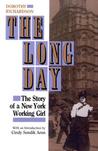
 The Long Day by Dorothy Richardson
My rating: 4 of 5 stars
It was in around 1880 that the idea of an archetypical “working girl” gained the interest of general public in America. By early twentieth century, the print media in New York witnessed the appearance of numerous articles and studies related to the living condition of women laborers employed in different vocations. Dorothy Richardson, a journalist then with the New York Herald, supposedly researched the subject and came up with The Long day which is the story of a New York working girl and which can well be looked upon as the true representation of the umpteen problems faced by the unfortunate, homeless girls, either immigrants or native Americans during those times. The story, being told in first person narrative, is often hailed as an autobiographical account though many critics suggest otherwise.
So it turns out that there are two Dorothy Richardsons. One, the English one, hailed as one of the architects of stream of consciousness technique in writing novels.The other one, and American Journalist, writing in the early 1900's as well. The merit of the author lies not only in the engaging artistic illustration but also in the realistic account of “working girl”. For one, though a first person narrative, we are never told the real name of the protagonist. And it can be attributed to the consideration which author intends for the “working girl” group since it is not only the story of a particular girl but can be the story of any girl struggling for everyday living in an industrial city, hence an archetypal character. She only acquires a name, Rose Fortune, in the VII chapter given to her by her roommate Henrietta Manners which is keeping in fashion with the names adopted from trashy romantic novels by most of the working women laborers.
We become acquainted with the swarm of cheap boarding houses buzzing in the veins of city, aiming at sucking even the last cent earned after a hard week’s labor in return for the meager facilities provided to the homeless working women. We come face to face with the horror of going shelter less in a big city whose infamous streets can serve as a breeding ground for all types of immoral activities and also with the impending danger of sexual abuse in factories or the hysterical fights ensuing between working girls – a reminder of the perils of little or no education at all.
But on the other hand, we also witness the unyielding force; that which drives the desire to live each day and to live well irrespective of the odds. We cheer at the virtues of friendship, empathy and kindness which do not let humanity die in the most adverse of situations.
Sometimes we also hear Dorothy’s own voice e.g. when she speaks of religion and we realize the skeptical voice:
“I used to believe everything I heard the evangelist say, but I don't think no more that religion is what it's cracked up to be."
Or about being equal to men, and so the work also seems to be raising feminist voice, even if so in regard to the work done in factories:
“But if it isn’t good enough for a man, it isn’t good enough for us, even if we are women!” I persisted.
She looked at me half in astonishment, half in suspicion at my daring to question the time honored order of things.
Or when she speaks of the necessity to work:
“To work is a privilege and a boon to either man or woman, and properly regulated, it ought to be a pleasure. To be worked is degrading. To work is dignified and ennobling, for to work means the exercise of the mental quite as much as the physical self.”
Of course all this is done in a beautiful artistic style which is engaging and never boring for you never lose interest in the narrative.
In the epilogue, Dorothy speaks about the necessity of education for all women; especially labor women, about the changes required in the way boarding houses function, about the need of specialized training and of working labor women becoming aware of their rights – she emphasizes on the need of joining trade unions here.
The work is an essential reading if one looks forward to becoming acquainted with the tribulations of “working girls” in the late nineteenth and early twentieth century New York. It was my first reading of this Dorothy Richardson and I can’t wait to read the other one as well. Special thanks to Jonathan for bringing the authors to notice :)
View all my reviews

No comments:
Post a Comment